Saturday, 4 December 2010

Science Museum -

Trash Fashion: Designing Out of Waste

Nowadays, ‘we’re buying a third more clothing then we did a decade ago’. The tailoring methods as well as the chemicals used and many other factors affect today’s environment. In this exhibition, designers are trying to promote the creation of clothing without waste by exploring the latest approaches and techniques.

New dyeing technologies (no use of water at all), tricks of light (material: morphotex -instead of dyeing), different tailoring methods, and biocouture, are some of the numerous techniques displayed.

This exhibition not only made me realize the damages even fashion has on the environment, but also enlightened me about the technologies discovered and developed during the past years to reduce the negative impacts on the environment.


Easier Recycling

The use of just one type of fiber makes any fabric much easier to recycle.
Kate Goldsworthy experiments here on a 100% polyester fabric using harmless chemicals and laser beams to cut into the fabric and create a pattern.


Sugar-made plastics

Polyester clothing is made out of oil, which is a non-renewable resource that is running out. ‘Ingeo’ –a bio-plastic called polylactic acid, produced by plant sugar- corn, wheat, sugar cane…- instead of oil.
Unlike oil, plant sources are renewable, and can be produced really quickly giving it a great advantage for the environment.


Bio-Couture

‘Cotton is the thirstiest fabric on the planet – 210,000 billion liters of water is used in its production each year.’ which harms the environment as well as the human’s health.
This is why Susanne Lee, a researcher at Central Saint Martins, started designing the bio-couture line of clothing. This concept consists of creating cellulose out of tiny bacteria grown in bathtubs of sweet green tea.
Although this technique appears to be a perfect option, it is still not in use.  The material absorbs water and can break down really easily.


Challenge of Materials

Tantalum

 Tantalum was originally used as lamp filaments. However, taking into account its benefits and assets, it became an important metal. Tantalum has a high melting point, and is easy to work. It has many uses as implants left in the body for surgery, s special glass for camera lenses, and occasionally used in precious watches. 

Stitch ...


In my opinion, stitch give you a big opportunity to explore your creative side, develop your artsy instinct and imagination, explore a huge number of techniques and materials to be able to achieve in the end the perfect outcome you were looking for.

Stitch made me discover and explore new techniques and manipulation of materials and fabrics that I wasn’t aware of.
However, during the two weeks of stitch I got sick and couldn’t research and explore as much as I would normally have. I could have been more creative, and come up with different ideas to translate my objects and drawings.
Still, I was happy about the outcome I came up with, and enjoyed working in 2D as well as in 3D.   


Knit ...


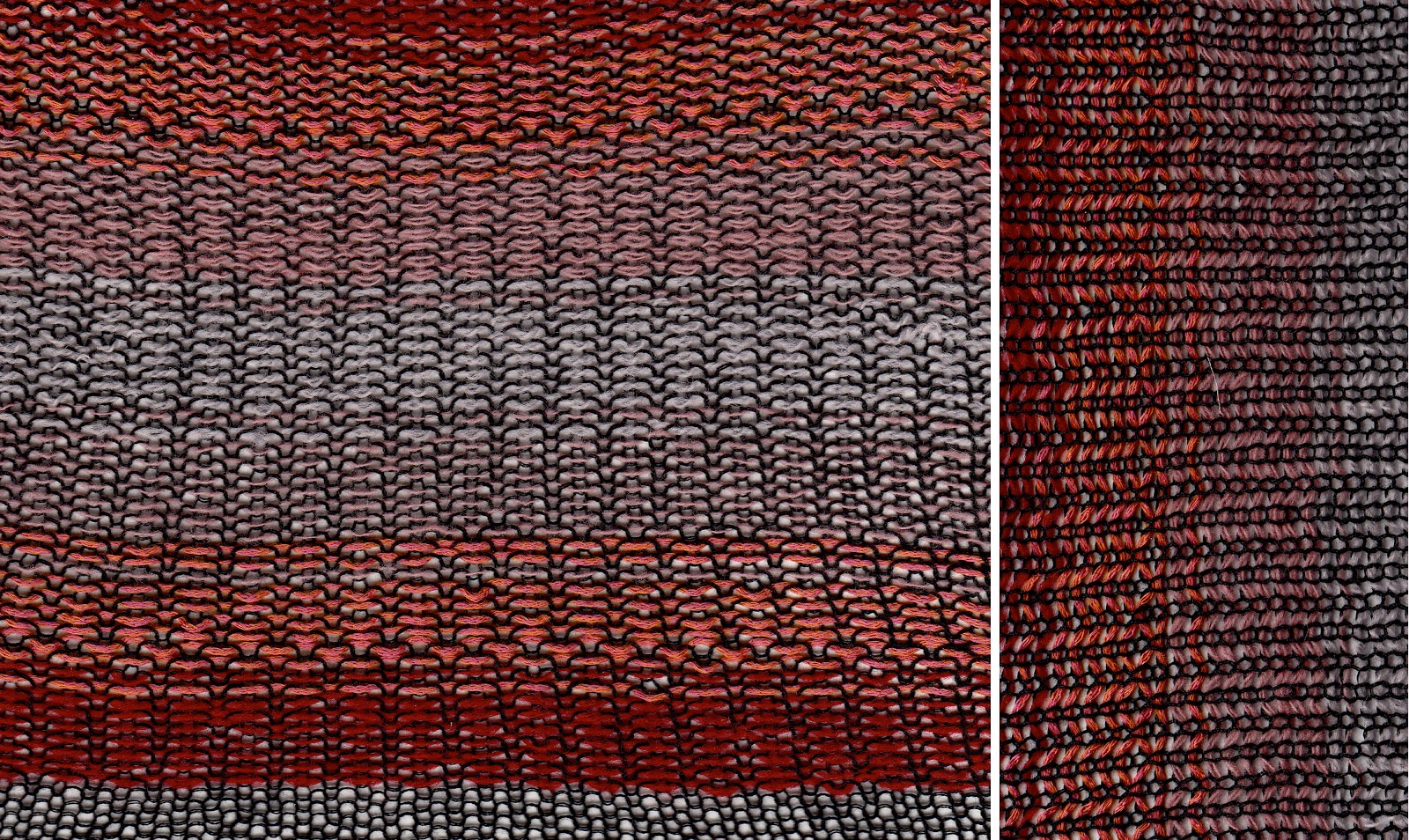
Knitting gives superb outcomes if properly done.
I personally couldn’t keep up with the many techniques given to us during a weeklong.

Since I struggled a bit in the beginning, I remained in my comfort zone, and stuck to the weaving within knitting technique.

However, I regret not experimenting and exploring other techniques- ladders, shapes-, textures, weights …  and since I would have loved to know how to really manipulate the knitting machines, if I get another opportunity, I would certainly try to make the most it


Pop-Up 1

\


The Shop


 Taking into consideration that it is the African environment that interested me the most in Brixton, a specific shop in the indoor market caught my attention.  African Queen Fabrics sells fine West African textiles. The fabrics are mainly made out of simple cotton, but it is their bright colors as well as their particular and unique patterns that give them this special African feel.

Placed in a different background- a market stall or a gallery- those textiles would probably be seen as a piece of art or even made as products- clothing, or accessories…

Friday, 3 December 2010

The Gallery

taken from Guantanamo: If the Lights Go Out by Edmund Clark


Walking around Brixton, I ended up in a small gallery called photofusion (17a electric lane, Brixton), where an exhibition was held around the Edmund Clark book Guantanamo: If the Lights Go Out. The displayed photographs taken from the book included the houses of former Guantanamo bay detention center detainees, the cells and spaces where they were held, the areas of the naval base in which the American guards and their families live, as well as letters sent by sympathizers to a particular captive.
There are no human subjects in the pictures. Clarks says “the portraits would be completely dehumanized [.] They wouldn’t actually say anything about the individual. Spaces are much more evocative.” The artist tried to reproduce the disorientation felt by the prisoners.

The picture I chose could have a completely other meaning in another context. It could look like a postcard in a shop, or look like a happy place for some and a random place for others. However in this particular situation, knowing what it is, and knowing about the history and the use of this place, this picture contains sadness, abuse, and torment.


reference: http://www.bjp-online.com/british-journal-of-photography/feature/1906922/guantanamo-light-goes

The Market


The Brixton market is open every day reflecting the indian and vietnamese communities in local area supermarkets and butchers amongst the shops and stalls, but mainly sell  a big range of afro-caribbean products.

 The first thing that attracted me walking down the alleys of the market, were the fruits and vegetables.  Those simple shapes, striking colors, and the mood they are set in- exotic African music and ambiance- reveal in my opinion the community, the people, and the atmosphere of the market.